
Traditional Easter Biscuits Recipe
Rated 5.0 stars by 1 users
Category
Easter
Servings
20 - 25
Prep Time
20 minutes
Cook Time
15 minutes
Calories
90
Bring a touch of tradition to your Easter celebrations with these delightful spiced biscuits!
With their buttery texture, a hint of warming spices, and sweet bursts of currants, they’re a classic treat that’s simple to bake and perfect for sharing.
These Easter biscuits are sure to become a firm favourite for family gatherings or nostalgic snacking.
Let’s get baking!
Ingredients
-
200g plain flour
-
100g caster sugar
-
150g unsalted butter (cold, diced)
-
1 tsp vanilla extract
-
A pinch of salt
-
200g icing sugar
-
3-4 tbsp water
-
Food colouring (yellow, pink, green, or your favourite Easter colours)
-
Sugar decorations (mini balls, hundreds and thousands, edible glitter)
For the Shortbread:
For the Decoration:
Directions
Step 1: Make the Shortbread
Preheat the Oven: Set your oven to 160°C (fan) / 180°C / Gas Mark 4.
Line two baking trays with parchment paper.
Mix the Dough: In a large bowl, rub the butter into the flour and salt until the mixture resembles breadcrumbs.
Stir in the sugar and vanilla extract, then knead into a smooth dough.
Roll and Cut: Roll the dough to about 1cm thickness on a lightly floured surface.
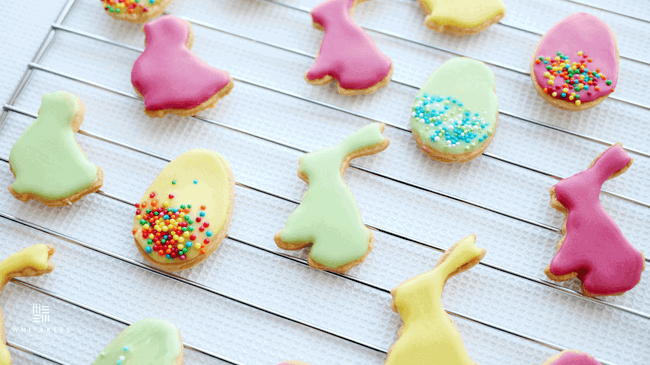
Use Easter-themed cutters (eggs, bunnies, and chicks) to cut out shapes and place them on the prepared trays.
Chill: Pop the trays in the fridge for 10 minutes to firm up the dough. This helps the biscuits keep their shape while baking.
Bake: Bake for 10-12 minutes, or until the edges are lightly golden.
Allow the biscuits to cool completely on a wire rack.
Step 2: Prepare the Icing
Mix the Icing: In a bowl, mix the icing sugar with water until smooth and slightly thick.
Divide into separate bowls and tint each with a different food colouring.
Transfer to Piping Bags: Pour the coloured icing into piping bags for precise decorating.
Step 3: Decorate the Biscuits
Outline and Flood: Use the piping bags to outline the shapes on the biscuits, then fill in with icing.
Use a toothpick to spread the icing evenly.
Add Decorations: While the icing is still wet, sprinkle on mini balls, hundreds and thousands, or edible glitter for a festive touch.
You can also use the icing to pipe patterns like polka dots, zigzags, or stripes.
Set the Icing: Allow the biscuits to dry for at least 1 hour, so the icing firms up.
Serving Tip
These biscuits make adorable gifts when wrapped in cellophane with pastel-coloured ribbons or can be served on a tray for Easter gatherings.
Happy Easter baking!
Recipe Notes
If you have any questions and this Shortbread Easter Cookies Recipe please post a comment below and we will get back to you asap.
Servings: The recipe typically yields about 20 delicious Easter-themed biscuits or cookies.
Calories per biscuit: 90 calories.
Remember: Tag #whitakerschocolates with your scrummy Easter baking creation!

How to Store Your Traditional Easter Biscuits
To store biscuits, follow these key steps:
Cool cookies completely before storing to prevent moisture buildup.
Use airtight containers with tight-fitting lids to maintain freshness and prevent staleness.
Store different cookie types separately to preserve individual flavors.
Keep cookies at room temperature for up to a week, or freeze for longer preservation, placing parchment paper between layers to prevent sticking.
Avoid storing soft and crisp cookies together, as they can impact each other's texture.
For decorated or frosted cookies, ensure they are fully set before storage and consider using containers with separate compartments to protect delicate designs.

What is the Difference Between Biscuits and Cookies?
In British English, biscuits and cookies differ primarily in texture and origin.
Biscuits are typically harder and crunchier, with a less sweet profile that can be either savory or sweet. They are thinner and flatter, exemplified by traditional types like digestives and shortbread.
Cookies, in contrast, are an American-style dessert with a softer, chewier texture, always sweet, and often featuring chunks of chocolate or nuts.
The main distinction reflects cultural culinary traditions, with "biscuit" in the UK referring to what Americans would call a cookie, while in American English, a biscuit is a soft, savory bread roll.
Why Do We Celebrate Easter?
Easter celebrates the Christian belief in the resurrection of Jesus Christ, which occurred three days after his crucifixion.
According to Christian theology, Jesus' resurrection represents victory over death and sin, offering salvation and hope to believers.
This event is considered the cornerstone of Christian faith, symbolizing divine love, redemption, and the promise of eternal life.
Historically, Easter marks the most significant religious holiday in the Christian calendar, commemorating Jesus' triumph and fulfilling biblical prophecies about his life and spiritual mission.
Nutritional Information
| Nutrient | Per Biscuit |
|---|---|
| Energy | 92 kcal (385 kJ) |
| Fat | 4.8 g |
| of which saturates | 3.0 g |
| Carbohydrate | 11.5 g |
| of which sugars | 5.2 g |
| Fibre | 0.5 g |
| Protein | 1.1 g |
| Salt | 0.04 g |
Approximate values. The recipe makes around 24 biscuits.
The History of Easter Biscuits
Easter biscuits have formed part of British baking traditions for many hundreds of years. Bakers created them to mark the Easter season and to use up stores of dried fruit and spices before spring fully arrived.
The warm spices inside carry special meaning. Cinnamon, nutmeg and mixed spice recall the spices carried by the women who visited the tomb of Jesus on the first Easter morning. Currants bring natural sweetness and stand for the new fruits that appear as winter ends.
Long ago, families baked these biscuits on Good Friday or the Saturday before Easter Sunday. They worked the flour, butter and sugar together by hand, then stirred in the dried fruit and spice. The dough was rolled out thinly and cut into neat rounds. Some bakers scored a simple cross on the top of each biscuit to remember the cross at the heart of the Easter story.
Different areas of the country developed small changes to the method. In the West Country, bakers added a splash of milk to soften the dough. In northern counties, they used extra spice for a bolder taste. The finished biscuits turned golden and crisp, sending a gentle spiced smell through the house.
The basic recipe changed very little over time. It relied on simple pantry items that most homes already had. When Whitakers began making chocolate in Yorkshire, many families served these biscuits with a square or two of their milk or dark chocolate. The plain, buttery taste of the biscuit balanced the rich chocolate perfectly.
In the 1800s, printed cookbooks spread the method to more households and turned it into a standard Easter bake across Britain. During times of rationing in the two world wars, people still found ways to make a small batch for the special day, stretching the sugar and butter as far as they could.
Today, Easter biscuits still appear on tables throughout the United Kingdom during the Easter weekend. They pair well with afternoon tea or as a treat for guests. Children often enjoy helping to roll the dough and press in the currants. The biscuits stay fresh in an airtight tin for up to a week, allowing bakers to prepare them ahead of family meals or church gatherings.
Making Easter biscuits at home keeps an old custom alive. It brings people into the kitchen together and creates lasting memories. The simple act of baking links us to earlier generations and to the deeper meaning of Easter itself.