
Delicious and Rich Toffee and Pecan Roulade Recipe UK
Rated 5.0 stars by 1 users
Category
Nuts
Servings
8
Prep Time
30 minutes
Cook Time
14 minutes
Calories
370
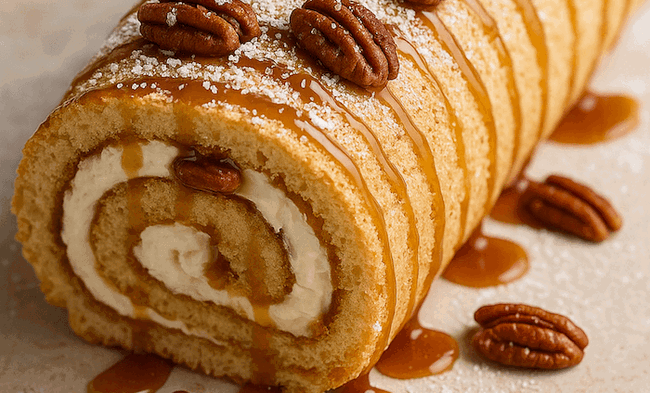
Nothing says indulgence quite like a beautifully rolled creamy dessert, and this Toffee and Pecan Roulade hits all the right spots.
With a feather-light sponge, a generous layer of whipped cream, sticky toffee sauce, and the satisfying crunch of toasted pecans, it’s a treat that’s sure to impress.
Perfect for UK home bakers looking to add a touch of elegance to their table, this recipe from Whitakers Chocolates is ideal for everything from family gatherings to quiet Sunday afternoons.
Simple to make yet packed with flavour, it’s a dessert that brings joy to every bite.
For an extra twist, try adding some finely chopped Whitakers chocolate to the filling for a hint of yumminess.
Ingredients
-
4 large eggs
-
100g caster sugar
-
100g plain flour
-
½ tsp baking powder
-
Pinch of salt
-
300ml double cream
-
2 tbsp icing sugar
-
1 tsp vanilla extract
-
75g pecans, toasted and chopped
-
3–4 tbsp toffee sauce (homemade or store-bought)
-
Extra pecan halves
-
Drizzle of toffee sauce
-
Dusting of icing sugar
For the sponge:
For the filling:
Optional toppings:
Directions
Preheat and prepare the tin
Preheat the oven to 200°C (180°C fan) / Gas Mark 6.
Grease and line a Swiss roll tin (approx. 33 x 23cm) with baking paper, making sure the paper comes up the sides.
Make the sponge
In a large bowl, whisk the eggs and caster sugar together using an electric hand whisk or stand mixer for 5–7 minutes, until pale, thick, and tripled in volume.
Sift in the flour, baking powder, and salt.
Fold in gently with a spatula to retain the air.
Pour the mixture into the prepared tin and spread evenly.
Bake for 12–14 minutes or until golden and springy to the touch.
Roll and cool the sponge
While the sponge is baking, place a clean tea towel on your work surface and dust with icing sugar.
When baked, turn the sponge out onto the tea towel and peel off the baking paper.
Score a shallow line about 2cm from one short end to help with rolling.
Roll the sponge up gently (with the towel inside) from the scored end and allow to cool completely.
Prepare the filling
Whip the double cream with icing sugar and vanilla extract until soft peaks form.
Carefully unroll the cooled sponge.
Spread a layer of toffee sauce, followed by the whipped cream.
Sprinkle over the chopped pecans.
Roll and finish
Gently roll the sponge back up (without the towel this time!).
Transfer to a serving plate, seam side down.
Drizzle with extra toffee sauce, add pecan halves, and dust with icing sugar if desired.
Whitaker’s Tip
Add a touch of Whitaker’s finely chopped milk or dark chocolate to the cream or toffee layer for a hint of chocolatey decadence.
Recipe Notes
More Delicious Recipes:
If you have any questions about how to make this recipe, please post a comment below and we will get back to you.
Servings: The recipe typically yields 12 delicious portions of pecan and toffee roulade.
Calories per serving: 370 calories.
Remember: Please tag #whitakerschocolates with photos of your homemade toffee and pecan roulade.

Serving Suggestions:
Serve chilled with a dollop of whipped cream or a scoop of vanilla ice cream.
This roulade is perfect for festive gatherings, Sunday desserts, or a special afternoon tea.
Make it a few hours ahead and store in the fridge until ready to serve.
How to Store Your Homemade Pecan and Toffee Roulade
1. Fridge Storage
Place the roulade on a serving plate or in an airtight container to prevent it from absorbing odours.
Cover loosely with cling film or a lid to protect the cream and toffee. Store in the fridge for up to 2–3 days.
The sponge may soften slightly over time due to the cream filling, but it will still taste great.
2. Freezing
If you want to make it ahead, the unfilled sponge can be frozen.
After baking and cooling, roll the sponge (with the tea towel) and wrap tightly in cling film, then place in a freezer-safe bag.
Freeze for up to 1 month. Thaw at room temperature, then add the cream, toffee sauce, and pecans before serving.
Note: Freezing the filled roulade is not recommended as the cream and toffee sauce can affect the texture when thawed.
3. Serving Tip
For the best flavour and texture, serve the roulade chilled but let it sit at room temperature for 10–15 minutes before slicing.
This makes the cream and toffee sauce softer and easier to cut.
Always check for freshness before serving, especially if stored for a couple of days.
Nutritional Information
| Nutrient | Per slice (approx. for 8-10 slices) |
|---|---|
| Energy | 395 kcal |
| Fat | 24 g |
| of which saturates | 13 g |
| Carbohydrates | 40 g |
| of which sugars | 35 g |
| Fibre | 1 g |
| Protein | 5 g |
| Salt | 0.25 g |
These values are estimates based on typical recipes for this style of meringue roulade and may vary with exact ingredients and portion size.
The History of Toffee and Pecan Roulade in the UK
Roulades have formed part of British baking for many years. The name comes from the French word meaning to roll. Early sponge versions, known as Swiss rolls, appeared in the 1800s and became a simple teatime treat filled with jam or cream.
Meringue roulades grew popular in the UK during the 20th century. They give a light, crisp base that rolls without cracking. Bakers often fill them with whipped cream and fruit or sweet sauces for a showstopper pudding.
Toffee brings a rich British taste. Sticky toffee pudding, created in the 1970s, helped spread the use of warm toffee sauces in desserts. Home cooks soon added caramel or toffee to many puddings and cakes for extra depth.
Pecans add a nutty crunch. These nuts came from North America and became easier to buy in UK shops as trade grew. Folding them into creamy fillings gives texture that many people enjoy in modern desserts.
Today the toffee and pecan roulade is a favourite for special occasions. It suits dinner parties, Christmas and family gatherings. The light meringue, sweet toffee and crunchy pecans create a dessert that looks impressive yet tastes comforting and familiar in homes across the UK.
What is a Roulade?
The roulade originates from French cuisine, with the term "roulade" meaning "rolled" in French, dating back to the 18th century.
Initially used for savoury dishes like rolled meats, it evolved into a sweet dessert in Europe, particularly in the UK, by the 19th century.
The dessert version, a light sponge rolled with cream or fruit fillings, became a classic for its versatility and elegant presentation, often served at afternoon teas or special occasions.